This is default featured slide 1 title

Go to Blogger edit html and find these sentences.Now replace these sentences with your own descriptions.This theme is Bloggerized by Lasantha Bandara - Premiumbloggertemplates.com.

This is default featured slide 2 title

Go to Blogger edit html and find these sentences.Now replace these sentences with your own descriptions.This theme is Bloggerized by Lasantha Bandara - Premiumbloggertemplates.com.

This is default featured slide 3 title

Go to Blogger edit html and find these sentences.Now replace these sentences with your own descriptions.This theme is Bloggerized by Lasantha Bandara - Premiumbloggertemplates.com.

This is default featured slide 4 title

Go to Blogger edit html and find these sentences.Now replace these sentences with your own descriptions.This theme is Bloggerized by Lasantha Bandara - Premiumbloggertemplates.com.

This is default featured slide 5 title

Go to Blogger edit html and find these sentences.Now replace these sentences with your own descriptions.This theme is Bloggerized by Lasantha Bandara - Premiumbloggertemplates.com.

Showing posts with label seo. Show all posts

Sunday, January 17, 2016

What's Next?Beyond the SEO Plateau: After Optimizing Your Website

What's Next?Beyond the SEO Plateau: After Optimizing Your Website


008

It's a near-universal experience for consultants and in-house SEOs who've worked on numerous organic search campaigns. The first 3–6 months (longer if the site is very large or complex) of any SEO effort is almost always exclusively dedicated to fixing mistakes, improving existing issues, tweaking and tuning the sub-optimal, and generally closing the gap between what exists now and current best practices.


The beautiful part of SEO is that, once completed, these efforts can have ongoing and compounding benefits for months or years to come. The newly accessible and optimized pages start earning rankings and traffic, which beget more links, more personalization-biasing, more exposure, more sharing, and more business. If you've got competent content & dev teams continually checking items off the list (and not creating many new ones), slowly the list of actionable, low-hanging fruit dwindles. I like to call this "the SEO plateau."


Click for a larger version


[embed]https://www.youtube.com/watch?v=exxEA2xywdY[/embed]

The existing parts of the site have been optimized. The processes for content creation are now efficient and up to SEO standards. That immense task-list of SEO to-dos is now a stable, manageable group of regularly addressed items. Don't get me wrong—it's an AMAZING place to be. There are plenty of companies that never reach it (since the move from SEOmoz to Moz, even we never have!).


But this cleared backlog also creates its own problems, namely the frustrating "What Are You Gonna Do Now?" question.


Sadly, answering with an "Are you kidding me?! SEO just 10X'd your traffic, streamlined your conversion process, and brings in more than half of all new customers!" just doesn't cut it. That's why we need to look at the 5 opportunities that nearly every organization has to jump-start from plateau to high-growth SEO. Not every one of these will make sense for every site, but each deserves analysis and investigation.


For this post, I'm going to assume you're a moderately advanced SEO and you've already optimized pieces like on-page SEO, made your snippets rock with killer titles & meta descriptions, fixed every technical issue that might have held you back, and gone through a few rounds of keyword researchand content creation/amplification. This process is about what comes next.


The 5 SEO Growth Opportunities:


  1. New Keywords & Content

  2. New Verticals & SERP Features

  3. Additional SERP Domination

  4. Moving Up the Buyer Funnel

  5. International/Multi-Language Targeting


If you're hitting that plateau, and finding year-over-year growth has stalled for organic search traffic, explore the descriptions below and make a smart call about what deserves your attention for the year ahead. Sometimes, that option may not be obvious, in which case: experiment, iterate, measure, and then determine how to prioritize.


New keywords & content


This option comes up most often when search traffic growth starts to stall but rankings remain high. Growth-focused organizations aren't satisfied dominating rankings for keywords they already own, so they chase an ever-expanding list of terms and phrases that could bring valuable traffic.


Thing is, a lot of the time, this makes sense. It's an obvious move, but this is one of those seemingly elusive times when what's obvious and what's right often as not line up.


The keys to success with expanding your keyword list (and content creation targets) are:


1) Understanding your audience and the keywords that will actually drive value


Sadly, sometimes we get so focused on rankings and traffic that we forget that alone, these serve no purpose. If your new-found SEO boost brings in loads of new visits with little measurable impact on short or long-term conversions (even to the next stages of the funnel like return visits or email signups or a visit to the product pages), you might be barking up the wrong tree. It's OK to treat some traffic as purely brand-focused, and some content as likely-to-earn links but unlikely to convert visitors. But if the ratios get out of whack, it's your job to rein it in and get back to sensible targeting.


2) Knowing your domain's ranking ability


In niche after niche, there are a few powerful sites who can put up even mediocre content and rank well for it. In essence, they've trained Google (and searchers) to prefer their content on those topics. But, this power takes an incredible amount of time and energy to earn. Thanks to our recent acquisition of SERPscape, I can actually quantify this:


Well, OK, technically this is all Russ Jones' work (thanks buddy!), but the numbers make it clear. The overwhelming majority of sites only rank for a small handful of keywords, and it's only a few who ever break through and earn consistently high rankings across a large set of commercially-valuable SERPs.


If you have this goal (and long term, anyone seeking to dominate a sizable market should), you'll need to pursue that healthy mix of crazy, we'll-never-rank-for-it stretch goals, comfortable targets, and easy hits. Domain authority is one metric that can help, but given the complexity of topical authority in Google these days, there's also a sixth sense professional SEOs develop that should be applied here, too.


3) Hitting your sweet spot for amplification and links


We've learned recently that social media almost never works as the sole source of links that help earn rankings. But, we also know that without links, content is very unlikely to rank. Thus, the content we produce needs to aim for the kinds of amplification that can drive direct traffic and value, as well as the kinds that can earn links and rank. That's a challenge for almost every content creator, especially those who also try to make that content fit a promotional or revenue-driving goal (a very rare and impressive accomplishment indeed).


In my experience, the content that has the best likelihood of nailing these is going to be at the intersection of three things: content about which you (the content creator) have great passion, content where you can add unique value that previously has not existed (or hasn't been easily available) on the web before, and content that resonates with your audience and creates an emotional desire to share and amplify.


Nail that consistently and you'll be back on your way to the flywheel of SEO growth.


New verticals & SERP features


The list of verticals available through Google is astounding, but you can rely on Mozcast to help sort through the noise to ID the signal:


Via Mozcast's Feature Graph across 10,000 daily-tracked SERPs


If a vertical is in less than 1% of search results, it probably doesn't make a great target unless you have a very specific niche market where that feature's penetration is considerably higher.


The process here is simple: if a vertical or feature appears in a substantive number of search results globally and/or in a considerable number of the SERPs you care about to attract your search visits, it's almost certainly worth some effort. Google News, Shopping, Reviews, Images, Knowledge Panels, Tweets, Local Boxes, and more all have the potential to take away a lot of the clicks that would ordinarily go to "classic blue links"-style results. If you can own that SERP real estate before or even in addition to your competition, your traffic growth opportunities have considerably more room to rise.


One important note: YouTube on its own is the world's second-largest search engine. If video isn't coming up as a big opportunity for you, double check that math! For almost every niche there's a good possibility that video can bring in terrific audience attention and branding value, even if the traffic isn't as direct as from Google itself. Video SEO has changed since Google's move away from rich snippets for non-YouTube content, but it's still a massive search channel.


Domination through multiple results or slight ranking boosts


Many, many times, I've looked at a set of competitive search results, seen Moz ranking in the top 3, and thought, "We're good here; maybe I'll target something else." But, that mentality may be costing me some real opportunity:


Multiple listings in the same set of search results isn't just about getting more real estate, but about boosting traffic and click-through rate for both. Some analyses (that I sadly cannot locate anymore and didn't properly bookmark) have shown that two listings in the search results can have a greater CTR than just position X + position Y. Like great romances, the effect of dual listings is greater than the sum of its parts.


Likewise, thinking that #2 or #3 are "good enough" is also probably costing me the chance to scale search traffic considerably. Depending on the CTR curve you like best, #1 is averaging 1.5x–2.5X as much traffic as #2, and in SERPs where verticals or SERP features may be intruding, it could be even higher.


Via my Moz Analytics account


Ignore that SEO traditionalist in your head that bypasses keywords where you already rank in the top 3 or top 5, and double-down on the SERPs where you're just inches from 1st place (or another great piece of content away from a double-ranking).


Moving up the buyer funnel


I can't count the number of times I've started helping an organization think through SEO and discovered that the only keywords they pursue are those that lead directly to conversions.


Repeat after me: "SEO is not PPC."


That means in SEO, you don't need to limit your keyword targets to only those with a given conversion rate. Your ROI equation can be years in length because organic search will keep sending visits for years if you earn and maintain high rankings. It also means that your keyword and content pairs shouldn't be limited to those producing conversions at all. At Moz, for example, we know that the path to conversion can be long and winding.


A couple years back, we found that the average person taking a free trial of our software had visited Moz's website 7.5X before signing up. SEVEN AND A HALF! What's more, those who visited more times before they converted tended to be better customers—they used more features, were less likely to cancel, and were more likely to participate in our community, too. It's been wonderful knowing that the goal of most of our content is simply to make raving fans out of the people who interact with it, not to necessarily turn those visitors into buyers as quickly and efficiently as possible.


This lesson doesn't just apply to us—you, too, should be thinking about where your customers' journey begins and what they're searching for long before they ever consider your product (or any solution) to their problems:


The benefits of moving your keyword research and content creation up the funnel are twofold:


#1 - It tends to be considerably less competitive to target terms and phrases that have lower commercial/direct-conversion-intent.


#2 - The keyword and content universes higher up the funnel often expand exponentially, giving you vastly greater opportunities for search traffic growth.


Imagine you're helping a local roofer in Seattle, WA with their SEO. The current keyword options are probably very limited and hyper-competitive (e.g. "seattle roofing," "roof leak seattle," "roofing contractor seattle," and so on). But, move up the funnel and suddenly a whole world of possibilities reveal themselves ("roof protection," "comparison of roof sealants," "seattle roof weatherproofing," "best shingles for roofs in windstorm," etc). I know local small businesses who've built their entire conversion funnel around educational content posted through photo tutorials to their website and videos on YouTube. They end-around the traditional conversion-focused keywords by earning a loyal audience that amplifies their work through word-of-mouth, often when they've never even been a direct customer!


Plus, although it technically falls under the paid search umbrella, RLSA (Remarketing Lists for Search Ads) mean that if someone's already visited your site once and you know you want to reach them again if they search for more downfunnel keywords, you can bid higher and more effectively for them in Google AdWords.


International/multi-language targeting


For larger organizations seeking to expand their markets, growing beyond your local country and/or local language may be an avenue of considerable opportunity. It's not easy, and in SEO, it can require starting nearly from scratch (depending on how you're pursuing international expansion—new TLD extensions vs. subfolders, etc). This is not my area of expertise by any means, but I love what Eli Schwartz says about the practice in his post: don't assume, and don't stereotype.


Do your keyword and market research first! Don't assume (see?!) a practice, product, service, or niche will be equally large in a market simply because it has similar economics, population, or even language. The English love Marmite, but it's just not gonna fly in the US (or really any other country for that matter). American TV producers seeking to export Desperate Housewives of City X will likely find themselves up a creek. And Bavarian home mural painting services will find themselves stymied pretty much everywhere but Bavaria (which is sad because I find them delightful).


click here for more

Why I Stopped "Selling SEO" Services and You Should, Too

Why I Stopped "Selling SEO" Services and You Should, Too


تنزيل (10)

In my 10 years on this planet, I've come to accept two things as fact:


  1. The sun rises every morning.

  2. Marketers screw everything up.


Because of fact No. 2, I had to stop selling SEO.


Why? Here's an interaction I used to have five times a day.


Example #1: Search "best headphones"


Screen Shot 2015-07-17 at 6.22.33 PM


What do you notice?


Not a single result on the first page is a product page.


Screen Shot 2015-07-17 at 6.46.24 PM


They're all articles about different headphone types, their benefits, pricing, etc.


Screen Shot 2015-07-17 at 6.22.57 PM


We're all Google users. We all know these are much better results to get than getting a single brand's product page. I want to shop around, compare products, and read reviews. Don't you?


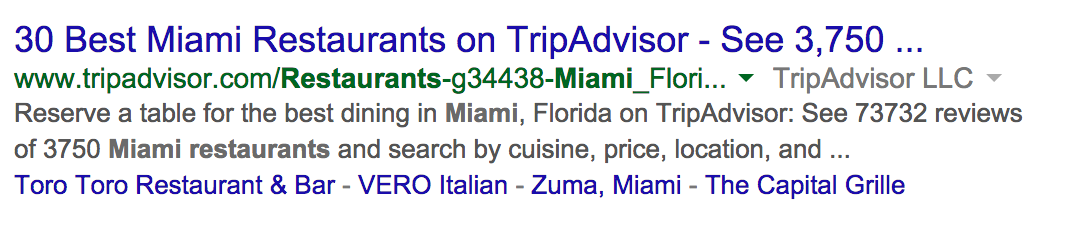
Example #2: Search "restaurants in miami"


Screen Shot 2015-07-17 at 6.47.57 PM


What do you notice?


Not a single result on the first page is a restaurant's website.


As a matter of fact, the results above the fold are tied to review aggregators and Zagat ratings.


[embed]https://www.youtube.com/watch?v=2ZtoB0WDyRE[/embed]

Screen Shot 2015-08-07 at 7.58.26 PM


Underneath the fold, the results are filled with listicles, reviews, and articles.


Screen Shot 2015-07-17 at 6.53.03 PM


I'd much rather read reviews about dozens of restaurants than be directed to a singular one.


Example #3: Search "buy a cheap tv"


Screen Shot 2015-08-16 at 10.36.21 AM


What do you notice?


Ahhhh, yes, I threw this one in for the comment trolls.


The top five results are product pages. However, they're all mega-brands. With the current algorithms, we'll never outrank a brand for keywords like that (without spamming the hell out of it).


What else do you notice?


Screen Shot 2015-08-16 at 10.36.48 AM


Articles, not product pages, are ranking at the bottom of the first page.


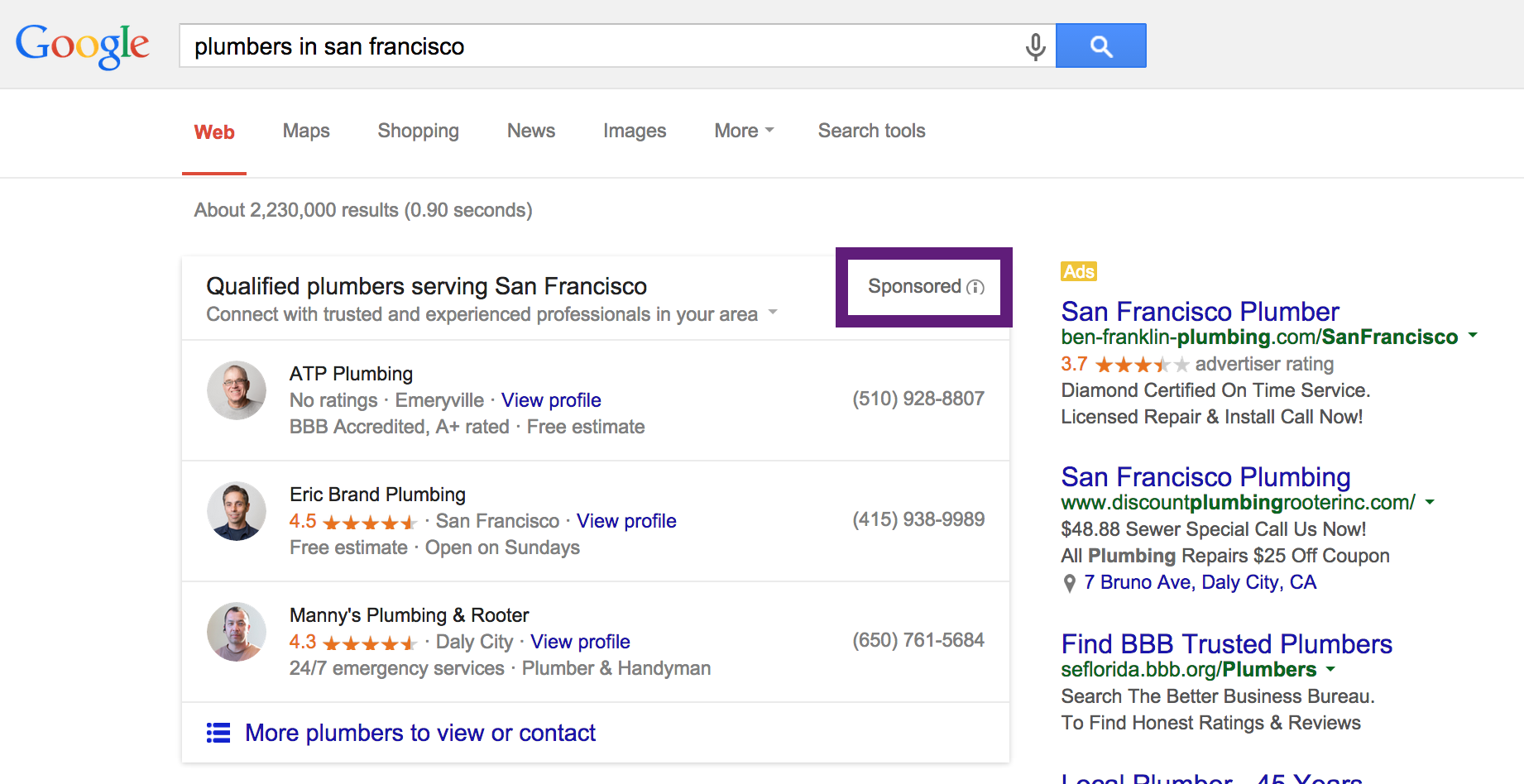
Example #4: Google "plumbers in san francisco"


Screen Shot 2015-08-16 at 10.41.16 AM


What do you notice?


Screen Shot 2015-08-07 at 7.42.26 PM


Not a single result on the first page is a website. There are only review aggregators: Yelp and Google+.


OK, so what's happening?


It's a combination of two things:


#1: Google's got a lot of data, and they're utilizing it


It's safe to say Google understands what users want by analyzing the massive amount of data it has. If we take off our SEO goggles, it's hard to disagree.


Personally, I love the power of choice. I'd rather pick from a list of companies with reviews and comparison data than one that only includes websites that make it to the top of organic listings.


In addition (as much as I hate to say it), I trust brands. I'd rather buy a TV from Best Buy than www.shop-cheap-tvs.com. Wouldn't you?


#2: We're moving into the "pay-to-play" era with Google


Not too long ago, Facebook moved into the "pay-to-play" era. Now Google's headed that way.


Google's main source of revenue is advertising, counting for almost 90% of Google's revenue in 2014. And one of their main earners, display, is falling fast.


Google's message is clear: If you want to sell directly through the Google platform, then you'll need to pay for it.


Let's go back to my last example, "plumbers in San Francisco." Look at what's happening above the fold with that query:


Screen Shot 2015-08-07 at 7.04.45 PMThat's right, baby! Paid local listings.


If this test sticks, it's going to have massive implications on local search. If I were a betting man (and I am), I'm all in that this is the future of local search.


But is SEO dead?


SEO is absolutely not dead. As long as people use Google search, SEO will be alive.


However, let's recap. Money/buyer (i.e., purchase-intent) keywords are:


  1. Dominated by huge brands that 99% of the world can't outrank (without spamming)

  2. Returning less product pages and more articles and other forms of content

  3. Triggering the knowledge graph, review aggregators, and more user-focused results


What this means is it's time to seriously reevaluate the landscape. The days of ranking a products or services page first for these purchase-intent keywords are limited.


If we want to capture that traffic moving forward, there are three things we can do:


#1: Pay for it


This is very straight forward. I like to use paid search as a remarketing tactic. We capture traffic from all corners of the web, and then when those people are ready to buy (using those money keywords), we use highly targeted paid ads to snag their business.


#2: Create valuable content


If we go back to my first example, best headphones, the results are dominated by content that compares ratings and pricing for various headphones.


No one shares, engages, or links to products and services pages. The fact is, no one except for us cares.


Instead of trying to jam those pages with links, create a piece of content that delivers what Google (and users) want. By creating value with your content, you open it up to earning social media shares and powerful links from relevant sites.


If you want to compete against the big dogs for organic search real estate, content is your best option.


#3: Optimize your website for the web


It's SEO (Search Engine Optimization), not GO (Google Optimization).


Yelp is a search engine. Facebook is a search engine. Twitter is a search engine. Amazon is a search engine. Quora is a search engine. Pinterest is a search engine. YouTube is a search engine. See where I'm going?


Each of these platforms offers unique benefits to the user. In a lot of cases, people looking for things on these platforms are likely to bypass Google altogether.


For example, l just moved into a loft in downtown Miami. I loathe shopping of any sort, so I allowed my girlfriend to manage the process for me. She ended up purchasing all of the furniture from Etsy (an e-commerce platform I knew very little about).


I asked her how she arrived there. This is what she told me:


search-engin-pick


  • Pinterest - She used Pinterest search to find inspiration on how to decorate. Using keywords like "loft decorations," she narrowed it down to the specific pieces of furniture she liked.

  • Amazon - She then went to Amazon and searched with keywords that were based on the furniture she liked on Pinterest. She was looking for rustic furniture. Amazon didn't have a great selection of that type.

  • Ebay - So she moved to Ebay, knowing that she could find cheap, secondhand (i.e., rustic) furniture there. She found that most things were a little "too used," so she moved on.

  • Etsy - Finally, she landed on Etsy, knowing they specialize in unique handmade items. She purchased all the furniture from there (and simultaneously broke my bank account).


Now, I realize she could've used Google to search for all these things. She chose not to, though, because she felt it was an extra step she didn't have to take.


She chose to use those specific websites/platforms/search engines because each one was built to handle exactly what she was looking for.


Applying this to your website


The long-winded point I'm trying to make is this:


It's no longer just about optimizing your website for Google. It's about optimizing your presence across the web.


By understanding who our target audience is and where they spend their time, we can attack those platforms and build an organic presence.


  • If you're an attorney, you need to be on sites like Avvo, Lawyer.com, and Find Law because they dominate the SERPS

  • If you're a local business, Yelp and Thumbtack are crushing it right now

  • If you have an e-commerce store, get your product on as many platforms where your customers are as possible (including Pinterest)

  • If you sell large-ticket B2B services, SlideShare and LinkedIn are gold mines for connecting with C-suite executives looking for information


The list goes on and on...


Bringing it all home


This is why I stopped selling SEO. I'm begging you to follow suit.


We need to educate non-marketers that times have changed. We can't just "rank and bank" for whatever we want anymore.


We don't want to wait around until it's too late. This isn't a phase. This is the way it's going to be going forward, and we all need to get on board with it.


As Google gets more intelligent, we need to get more intelligent about how we approach marketing. That doesn't mean looking for ways to beat the search engine algorithms. Instead, we must learn to use them to our advantage.


click here for more


Stop the Local "SEO" Tunnel Vision & Think Beyond the "Basics"

Stop the Local "SEO" Tunnel Vision & Think Beyond the "Basics"


9

"Local SEO is just too hard."


Those were the first words of a conversation I had earlier this week coming from a potential client we'll call "Luke." Luke had been working on building his own local SEO presence internally for his dental office for over a year and had not seen the results he expected in a popular top 100 US city. We talked about citations, his trouble getting reviews, and how hard it was for him to get links. He told me he had followed the best practices but had not seen the kind of #1 ranking results he was looking for. Luke was a bit defeated, so I dove a little deeper and asked him more specifically what he'd done. He told me that he had done the following:


  • Optimized his Google My Business profile

  • Gotten a handful of reviews

  • Built the basic citations

  • Removed the citation issues I found

  • Gotten a few links

  • Posted new localized content from time to time


So I prodded a bit further and tried to get some details about his competition. I asked Luke what his competitors had done. He told me that they had done the exact same things he had done. He told me that he watched them and tried to just "replicate" on his own site what he saw from the top performers. This perked my interest and caused me to ask him a real-world question.


"Luke, if you're doing the same things as everyone else, why do you deserve to be rewarded or ranked higher than them? What makes you better?" - Casey Meraz


This basic question had major implications and he finally understood why I'd started asking about the rest of his website's health. As an SEO, it's easy to make assumptions as to what's causing ranking gains, but keep in mind you can never really know the whole picture. We don't know what links they disavowed, and we sure don't know which links Google sees but that other link detection tools are not picking up.


It's time to break free from local SEO tunnel vision.


In this article, I'm going to talk about some tactical things you can do to market your business and increase your local SEO presence. To do so, we have to break free from our tunnel vision a bit and bring in new strategies on a constant basis. But why should we do this?


[embed]https://www.youtube.com/watch?v=OriKcG8SUVs[/embed]

With the recent local pack shake up and 2016 around the corner, I think it’s time that SEOs and marketing managers start to look to the future.


What do I mean? Almost any post you read online pertaining to local SEO is quick to point out that you need the basics, such as a strong citation profile with no duplicates, quality links, and some local on-page optimization. But does it really stop there? Should it stop there? Or should we be looking at the signs Google’s been giving us? It's no secret that Google has been moving towards taking on more organic signals. What does the future really hold for us and how should we be advising our clients?


What I'm going to be covering can be broken down into three main sections:


  1. Don't ignore the basics.
    While I am telling you to think outside of the box, I'm not saying you should ignore the basics. Having a strong basic foundation to local SEO is key to your long-term and short-term SEO success.

  2. Think more about traditional organic ranking factors.
    We are going to do a deep dive here where we'll talk about the reasons and implications of having a solid website with more of an organic SEO mindset.

  3. Don't stop believing in citations and links.
    We know that links are important both for local and organic SEO. Why stop with the basics? As long as they're healthy, keep trucking along.


1. Don't ignore the basics in local SEO.


I'm not going to spend a lot of time covering this, but it's important to reiterate it. Local SEO is built on a strong foundation of best practices. These include everything from having consistent and non-duplicated citations — which consist of your NAP (Business Name, Address, and Phone Number) on the top directories and data aggregators — to ensuring your landing pages are properly optimized.


Worry about the basics first, then move onto step 2 — traditional organic ranking factors.


To get an idea of what I mean when talking about "the basics," read these cool resources:


– How to Perform the Ultimate Local SEO Audit


– Website Optimization Basics for Local SEO


– Local Search Ranking Factors for 2015


2. Think more about traditional organic ranking factors.


Google really loves their traditional organic ranking factors. How do I know this? Well, whether it was Pigeon, Mobilegeddon, or other updates, you can see that Google is trying to provide users with the best online experience. They don't want to show non-mobile-friendly results when a user is searching on their phone.


It’s no secret that Google’s algorithm is getting more sophisticated every year. As they do this, it becomes clear that they want to provide a great search experience, as well as a great user experience.


This is why we need to take a step back, shake our heads, and start looking around. If you want to be competitive for your clients in the long-term, it would be wise to start taking steps toward the future now.


Below are a list of some of the most common issues I see. For a full list of items to audit, check outSteve Webb's SEO audit here.


Common on-page errors that hurt or hinder local SEO efforts


  1. Not having a mobile-friendly website
    Ok, seriously. You've heard of Mobilegeddon (which was a bit over-exaggerated). But if you're taking your time and still haven't built a mobile site, you need to fix that ASAP. With so many searches being mobile now and with Google caring more and more about organic ranking signals, don't be surprised if you're not rewarded in mobile search results if you don't have a mobile-friendly website.


  2. Using a bulky and non-SEO-friendly theme
    The problem with buying a website theme without testing it for speed considerations first? Page load time. We'll talk more about that in just a minute, but it's a real problem. The reason that websites range from as low as free to thousands of dollars is typically because great websites require a great deal of work. Minifying the code and ensuring that every element loads quickly and properly on browsers is essential. Check out this handy web developers cheat sheet to get a better grasp on the factors that are most important.


  3. Having slow site speed
    Recently I was consulting for a client in the dental field who had atrocious site load times. Google cares about the user experience — if your site takes forever to load, you can bet that will have a negative impact on you. Not to mention, this might mean the Google crawlers will spend less time checking out your website.


  4. Having a lot of 404 errors
    Log in to the Google Search Console and run a site crawl with Screaming Frog to figure out where 404s exist on your website. If you have a bunch of broken pages, you're both missing out on their link juice and you're showing that you're not taking good care of your website. Show that you care about your site and clean these babies up.

  5. Using 302 redirects
    302 redirects from the outside in aren't passing that valuable link juice you need. Since we know link equity is a ranking factor, we need to keep as much of it as we can. Do not use 302 redirects for permanent changes. Fix these and update them to 301 redirects.


  6. Using 301 redirects internally
    If you update a link on your website and it creates a broken link, don't take the easy way out and just create an internal 301 direct. I see a lot of issues with these where, over time, webmasters will lose sight of them and multiple redirect levels will take place. Use a tool (like Screaming Frog) to identify these errors and their source. Make sure to clean them up to prevent issues. Remember, if your links are taking multiple hops, you're diminishing their link value.


  7. Missing title tags
    If you're using Wordpress, you can easily add title tags in a number of ways. I prefer the Yoast SEO Plugin. It's solid, it's regularly updated, and it works to easily update title tags on your pages. Make sure all of the pages on your site are taking advantage of title tags and localized title tags.


  8. Missing H1 heading tags. Seriously, check this.
    Not having local-centric H1 tags is a common problem I see with local pages. One of the problems is that you might think you have H1 tags on your Wordpress theme, but in reality they're not coded that way. Sometimes there are disconnects between developers and SEOs, and this sort of thing occurs frequently. Use a tool like the MozBar browser plugin and page analysis tool to quickly point out if your web page is using an H1 tag. Make sure they're localized, too. :)


  9. Not having enough hyper-local text content
    Remember that Google is very granular on location detection now. If you list that you serve or do work in surrounding local neighborhoods, you're going to get some benefit out of creating content around these areas. It really proves that you know the community and you're a part of it, as well.

  10. Not taking advantage of hyper-local images and videos
    Hyper-local content is not just text on a page. It can be a localized video or photo, as well. If you're serving a specific geographic area and creating content around it, you can tie local visitors into the content and get them to engage further if you're using photos of places they recognize. Localized photos are a great way to create unique content that's relevant to your local audience.


Common off-page errors that hurt or hinder local SEO efforts


  1. Citations using 301 redirects to other 301 redirects to...
    I feel like this is a pro tip, but it really isn't. This is an interesting one that I actually find is commonly overlooked. Let's look at a common scenario for this one:


    A common issue is when your citation or link sources were set up years ago, yet you've changed your website landing pages at some point since then. In this case, you probably would have created a 301 redirect so links from your citation sources redirect and pass link juice to the appropriate page. However, what if you've done this several times? What if you built strong links to these old URLs and then redirected them multiple times? It's a link value loss and it needs to be rectified.

    The solution is to update your links and citations to point to the proper landing page URL when possible.

  2. Stop adding new citations due to their citation value alone
    Everyone is quick to tell you that the top citations carry the most weight. I don't disagree with that. But I also think there's not a hard-and-fast decision that says you need to stop building citations. Most citations also have a link source to add a link. Nofollow links seem to help local SEO. Why ignore them? If you find quality directories, localized websites, or other places that you can get listed on, be sure to take advantage of them.


  3. Not getting enough reviews
    It's cool to rank in the top three results, but our click test studies have shown that many users will bypass the first or second result and click on the third if the number of positive reviews is greater. You need to have a solid review strategy in place in 2015. If you're running a great business and don't have a program for online reviews, then you need to get your act together.

    If you need a review solution, check out Get Five Stars — it's a review platform that allows you to easily acquire customer feedback and encourage online reviews.

  4. Your competition is spamming you in Map Maker
    In this post, Linda Buquet over at the Local Search Forum pointed out one way that businesses were scoring a Google One Box by cheating. Basically, either intentionally or through a data update, businesses were taking advantage of the Google Map Maker Alternate Names tab and keyword stuffing them with localized keywords, as you can see in the example below. If you see this, be sure to report it and get them addressed. You can search for these inGoogle.com/MapMaker by viewing the alternate names.


Something you need to overcome


Keyword-rich domains
They can be "exact match domains," "similar match domains," "keyword-rich domains," or whatever you want to call them. The reality is that if your competition is beating you because of this little trick, you need to step up your game. There is no denying their benefit in local organic SEO; you need to create enough signals to overcome them. Below, I'll discuss how you can do this. With some hard work and elbow grease, you can beat out your competition in this area.


3. Don't stop building citations and links.


So you've taken care of all the SEO best practices and you're still not winning? Where's your elbow grease? Do you think your competition stopped? Do you think they stopped because you're winning? If so, you'll be up for a rude awakening when they surpass you. It's far easier to maintain superiority than to fight to get it back after you've lost it.


This is one of the most common SEO mistakes I see resulting from tunnel vision. As a marketer, when you start thinking, "Well, I've done everything I need to and it's working, so I'll just sit back and relax," all I can say is no, no, no. This is a detrimental mindset to both you and your clients' success. Always keep building the exposure and the brand. Never stop. Please don't stop believing, and please don't ask me to sing that at karaoke... because I will.


click here for more


Now, let's get tactical with some things you should be doing outside of the usual.


    1. Don't forget video creation & its benefits
      Did you create a video or two and lose steam? Did you forget how powerful videos can be and how easy they are to make? You can get a legitimately good video made on Fiverr for $50 that will blow your clients' minds. The key to this is doing your due diligence and not taking shortcuts. Create the outline, write the text, and order a well-made video. Whether you have a news announcement or want to just repurpose content on your website, video is a great medium. Good video will help your site flourish; don't produce crappy video.

      So, what can you do with a video? You can upload it to a number of sites like YouTube, Vimeo, and DailyMotion, earning a cool-looking citation and links to your local landing page.

    2. Don't stop with competitive citation analysis
      Competition analysis is easier than it ever has been. We have tools like Whitespark, Brightlocal, the N.A.P. HUNTER Extension, and Places Scout to easily identify competitors' citations. There is no reason not to keep a running list of these and a small commitment of, say, 10 new additions per month based on your top ten competitors in a space.


      If you don't have access to the tools listed above, you can also just do a Google search and see what listings come up for the competition that you don't have.

    3. Start getting new links & don't stop
      Luke mentioned during our conversation that "getting links was too hard." Let's think about that statement for a moment. If links were easy to get, wouldn't everyone go for them? Or perhaps they already earned the easy links. Of course, you can always gain links the traditional way by seeking them, for which I'll show you a couple of good resources below. However, some of the best companies are always newsworthy.

      The attorneys Sutliff & Stout ran a drunk driving campaign for the holidays. It got them on local news stations complete with real interviews, great links, and a very positive impact on their local visibility. These were real business actions they were taking that resulted in media attention.
      If you need ideas, here are some you can take home with you right now. I suggest reading these posts and making a schedule or a goal. Go after a couple a week. But don't just stick to one link building idea. Diversify, and be careful with your anchor text.

      – 11 Ways for Local Businesses to Get Links - Written by yours truly on the Moz Blog

      – 35 Sites Which Increase Your Domain's Trust - Shared with me by Adam Steele

      – 52 Link Building Ideas from Point Blank SEO

      – Building Links with local events from Kane Jamison

      – 8 Local Link Building Tactics Beyond Business Listings - Whitespark

      – Get Five New Links a Week (Lawyer-centric) - Juris Digital Blog


  1. Integrate your offline marketing and your online marketing
    How many times have you participated in an offline initiative, but didn't coordinate it with your online efforts? Real companies tend to be active in the community or have a presence. Whether that means they sponsor a Little League (link opportunity), they host an annual event (event link building), or they get local TV station interviews, these efforts and signals should be coordinated to have the maximum SEO benefit.


And finally... Set realistic goals for your efforts


If you're quick to promise results, make sure you can deliver on your timelines. I work mostly in the legal field with personal injury attorneys. In this field, you're competing with some of the best SEOs, people who have been doing this a lot longer than many of the "fly-by-night" guys. This means that, even though we're doing the right things and following best practices, we still need to be promoting the business everyday. Even taking this approach, the results will take time. It's a long-term investment and you have to stick with it. Set realistic goals up front with your clients and make sure they understand the competition.


With this knowledge, time, and power, you should have the resources you need to think outside of the box and dominate local SEO.

SEO Split-Testing: How to A/B Test Changes for Google

SEO Split-Testing: How to A/B Test Changes for Google


تنزيل (5)

At our late SearchLove meetings, I've been discussing things we have to do another way as advertisers in the midst of the enormous patterns that are reshaping seek. My partner Tom Anthony, who heads up the R&D group at Distilled, talked around 5 developing patterns:


Understood signs


Compound questions


Watchwords versus expectations


Web hunt to information look


Individual associates


These patterns are fueled by Google's expanding dependence on machine learning and computerized reasoning, and imply that positioning components are harder to see, less unsurprising, and less uniform crosswise over watchwords. It's turning out to be such a mind boggling framework, we frequently can't generally know how a change will influence our own particular site until we move it out. The absence of straightforwardness and absence of trust in results has two noteworthy effects on advertisers:


It harms our capacity to make business cases to legitimize focused on undertakings or activities (or even just to impact the request in which a specialized accumulation is tended to)


[embed]https://www.youtube.com/watch?v=9mFavAxv-2I[/embed]

It raises the appalling plausibility of apparently smart thoughts having unexpected negative effects


You may have seen the late news about RankBrain, Google's name for the use of some of this machine learning innovation. Prior to that declaration, I introduced this deck which highlighted four systems intended to succeed in this quick evolving world:


Desktop is the poor connection to portable


Comprehend application seek


Streamline for what might happen in the event that you positioned


Test to make sense of what Google needs from your site


It's this last indicate I need address in subtle element today — by taking a gander at the banquet of testing, the structure of a test, and a percentage of the philosophy for evaluating winning tests.


The advantages of A/B testing for SEO


Prior in the year, the Pinterest building group composed an intriguing article about their work with SEO tests which was one of the first open discourses of this procedure that has been being used on various huge locales for quite a while.


In it, they highlighted two key advantages:


1. Legitimizing further interest in promising territories


One of their trials concerned the lavishness of substance on a pin page:


For some Pins, we picked a superior portrayal from different Pins that contained the same picture and demonstrated to it notwithstanding the current depiction. The investigation results were vastly improved than we expected ... which roused us to put more in content portrayals utilizing modern innovations, for example, visual examination.


– Pinterest designing web journal


Different tests neglected to demonstrate an arrival, thus they could concentrate a great deal more forcefully than they would some way or another have possessed the capacity to. On account of the emphasis on the portrayal, this action at last brought about right around a 30% inspire to these pages.


2. Keeping away from deplorable choices


For non-SEO-related UX reasons, the Pinterest group truly needed to have the capacity to render content customer side in JavaScript. Fortunately, they didn't aimlessly reveal a change and expect that their substance would keep on being ordered fine and dandy. Rather, they rolled out the improvement just to a predetermined number of pages and followed the impact. When they saw a critical and maintained drop, they killed the test and counteracted arrangements to roll such changes over the site.


For this situation, despite the fact that there was some progressing harm done to the execution of the pages in the test bunch, it could not hope to compare to the harm that would have been done had the change been taken off to the entire site on the double.


How does A/B testing for SEO work?


Dissimilar to normal A/B testing that a large number of you will be acquainted with from transformation rate improvement (CRO), we can't make two variants of a page and isolate guests into two gatherings each getting one form. There is one and only googlebot, and it doesn't care for seeing close copies (particularly at scale). It's a terrible thought to make two variants of a page and basically see which one positions better; notwithstanding overlooking the issue of copy substance, the test would be muddied by the age of the page, its present execution, and its appearance in interior connecting structures.


Rather than making gatherings of clients, the sort of creating so as to test we are proposing here works gatherings of pages. This is protected — in light of the fact that there is only one rendition of every page, and that form is appeared to customary clients and googlebot alike — and powerful on the grounds that it detaches the change being made.


click here for more


All in all, the procedure ought to resemble:


Recognize the arrangement of pages you need to move forward


Pick the test to keep running over those pages


Haphazardly assemble the pages into the control and variation bunches


Measure the subsequent changes and announce a test a win if the variation bunch beats its estimate while the control bunch does not


Every one of the A/B testing needs a specific measure of extravagant insights to comprehend whether the change has had an impact, and its probable size. On account of SEO A/B testing, there is an extra level of many-sided quality from the way that our two gatherings of pages are not even factually indistinguishable. As opposed to just having the capacity to look at the execution of the two basins of pages specifically, we rather need to figure the execution of both sets, and confirm that a trial is a win when the control bunch coordinates its gauge, and the variation bunch beats its estimate by a measurably noteworthy sum.


Not just does this adapt to the contrasts between the gatherings of pages, yet it likewise secures against extensive impacts such as:


A Google calculation upgrade


Regularity or spikes


Irrelevant changes to the site


(Since none of these things would be relied upon to influence just the variation bunch).


Great measurements for measuring the achievement of tests


We for the most part prompt that natural inquiry activity is the best achievement metric for these sorts of tests — frequently combined with enhancements in rankings, as these can here and there be identified all the more rapidly.


It is enticing to believe that rankings alone would be the best metric of accomplishment for a test such as this, since the general purpose is in making sense of what Google lean towards. In any event, we trust these must be consolidated with activity information in light of the fact that:


It's difficult to recognize the long tail of watchwords to track in a (not gave) world


A few changes could enhance clickthrough rate without enhancing positioning position — and we absolutely need to make preparations for the inverse


You could set up a test to gauge the change altogether transformations between the gatherings of pages, however this is prone to merge too gradually practically speaking on numerous destinations. We for the most part take the sober minded perspective that the length of the page stays concentrated on the same point, then developing inquiry activity is a legitimate objective. Specifically, it's critical to note that not at all like a CRO test (where movement is thought to be unaffected by the test), change rate is an awful metric for SEO tests, as it's possible that the guests you're as of now getting are the most qualified ones, and multiplying the activity will increment (however not twofold) the aggregate number of transformations (i.e. there will be a lower transformation rate despite the fact that it's a sensible activity).


To what extent ought to tests keep running for?


One favorable position of SEO testing is that Google is both more "objective" and predictable than the gathering of human guests that choose the result of a CRO test. This implies (excepting calculation upgrades that happen to focus on the thing you are trying) you ought to rapidly have the capacity to find out whether anything emotional is going on as an aftereffect of a test.


In choosing to what extent to run tests for, you initially need to settle on a methodology. On the off chance that you basically need to confirm that tests have a positive effect, then because of the sane and steady nature of Google, you can take a genuinely commonsense way to deal with looking so as to evaluate whether there's an inspire — for any expansion in rankings for the variation pages over the control bunch anytime after sending — and roll that change out rapidly.


In the event that, on the other hand, you are more careful or need to quantify the size of effect so you can organize future sorts of tests, then you have to stress more over factual essentialness. How rapidly you will see the impact of a change is an element of the quantity of pages in the test, the measure of movement to those pages, and the size of effect of the change you have made. All tests will be distinctive.


Little locales will think that its hard to get factual centrality for tests with littler elevates — however even there, inspires of 5–10% (to that arrangement of pages, recollect) are liable to be discernible in a matter of weeks. For bigger destinations with more pages and more activity, littler inspires ought to be discernible.


Is this a true blue methodology?


As I delineated over, the trial setup is composed particularly to maintain a strategic distance from any issues with shrouding, as each guest to the site gets precisely the same on each page — whether that page is a piece of the test assemble or not. This incorporates googlebot.


Subsequent to the expectation is that changes we find by means of this testing frame the premise for as good as ever normal site pages, there is additionally no danger of making entryway/passage pages. These ought to be better forms of true blue pages that as of now exist on your site.


It is clearly conceivable to outline horrible investigations and do things like stuffing catchphrases into the variation pages or stowing away substance. This is as imprudent for A/B tests as it is for your site all in all. Try not to do it!


By and large, however, though a couple of years prior I may have been concerned that the triumphant tests would predisposition towards some type of control, I feel that is less and less inclined to be valid (for connection, see Wil Reynolds' phenomenal post from mid 2012 entitled how Google makes liars out of the great folks in SEO). Specifically, I trust that sensibly-planned tests will now viably utilize Google as a prophet to find which variations of a page most nearly match and ful

Using Domain Names as the Cornerstone of SEO

Using Domain Names as the Cornerstone of SEO


google adsense,what is google adsense,how to make money with google adsense,learn about google adsense,google adsense banded me,facebook,blog,blogger,net marcket,business,seo,website,make,money,Social Media


تنزيل (3)


Savvy domain investors have been aware of the concept and benefits of using keywords in their domain names for SEO purposes since the beginning. The rest of the world has started to catch on in recent years.


While doing some freelance projects for my New Year website development special, I couldn’t help but notice a trend that comes up in almost every site; keyword domains. Clients are either interested in finding a great keyword domain or already have one ready to go.


[embed]https://www.youtube.com/watch?v=rAWFv43qubI[/embed]


Leading SEOs and even Google’s Matt Cutts have confirmed that keywords in domain names offer benefits to search rankings. The benefits have been observed by many and even thought to be too much by some.


My personal philosophy and reasoning for using keyword domain names extends beyond this primary benefit. In this article, I will share some ideas on keyword domains and why I think everyone should consider using them.


Keyword Targeting


The #1 reason that keywords in domain names are beneficial for SEO is not because of some secret Google algorithm, it’s simply that other web properties will link to your website using the keywords in your domain or business name.


Business Name – It’s 2012 and the domain name should now be an essential part of naming any business. I’m sure you’ve heard that picking a domain name can be frustrating. Many business owners are not familiar with keyword tools or the domain industry for that matter. This leaves an opportunity for those in-the-know to gain a significant competitive advantage using keywords in their domain.


Generic Domains – These are the “Holy Grail” of keyword domain names, representing the exact match term(s) and nothing else. Generic domains are typically highly valued and sought after virtual real estate. However, it is still possible to acquire them on the aftermarket or speculate on new and emerging industries. Generic domains can provide tremendous boost to SEO efforts.


Long-tail Domains – Opportunity awaits those willing to venture into the territory of longer domains. Three word domains are fast becoming commonplace and are being used to rank for exact match phrases, products and services. Developing one or more long-tail keyword phrase domains can set you up to receive consistent targeted leads from organic search traffic for those terms.


You can use the popular Google AdWords keyword tool to discover high search volume / low competition keyword phrases that may be available to register as .com domains.


Branding


It’s true that brandable domain names can work just as well as purely keyword domain names; a previous post covered all those details. As mentioned in the editorial, keywords can also play a part in the branding process.


Keyword + Brand– Using a keyword connected to a unique brand identifier is a great strategy for those on a budget or in a somewhat crowded niche. These domains can be easier to find and may help you along the brainstorming process of naming your business.


For example, a Raleigh Catering company could find SEO benefit using a domain like RaleighCateringPros.com. The Pros suffix is relevant to the business, but will not be searched for by new customers. However, over time, the site will gain backlinks which include the phrase “Raleigh Catering.”


Short Links – Many businesses and publications are beginning to use their own custom domain names as link shorteners. This can potentially provide additional SEO benefits through social network sharing as articles propagate through the web.


Keywords provide instant recognition which is great for usability, advertising and marketing. They also bring preconceived expectations, so be sure to deliver with relevant content.


Remember that domain names are essentially your cornerstone for SEO. You’ll still need to work hard to optimize you website, it’s content and engage in a constantly changing social web.


Do you use keywords in your domain names? Are you struggling to find a viable domain? Please leave a comment below to share your experience using domain names for SEO.

5 Tips on Using Social for SEO

5 Tips on Using Social for SEO


تنزيل (2)


google adsense,what is google adsense,how to make money with google adsense,learn about google adsense,google adsense banded me,facebook,blog,blogger,net marcket,business,seo,website,make,money,Social Media


Social media is often overlooked in its roll as an element of SEO. In this article I share 5 areas of interest along with some suggestions for using social media marketing and social networking to increase you presence and rankings on search engines.


1. Set the Right Twitter Name


Just the name, no frills.


One of the most powerful tips for ranking high for your personal or brand name is to carefully craft your Twitter profile name. Not the username, but the name associated with the profile that gets displayed as the page title.


Use the keyword, name or phrase you want to rank for. No other words, characters or icons.


Image via Flickr.


Over time your profile will gain backlinks from yourself and your own website and likely dozens more from Twitter profile directories and applications. An active profile almost always has a shot at ranking on page 1.


2. Fresh Content and Embedding Twitter Updates


[embed]https://www.youtube.com/watch?v=-wa1blwIpAo[/embed]


One of the latest updates to Google’s search algorithm is rewarding fresh content. Google recently reported they’ve implemented this update which applies to queries posed in a way in which the newest content would be the most beneficial for the searcher.


The latest news and most-recent resources in your industry may be receiving a big traffic boost.


In other news from Google, it has been confirmed that indexing of dynamic content such as AJAX/JavaScript is now live. This includes elements like Twitter status updates widgets and advanced commenting platforms like Disqus and Facebook Comments.


Social media updates are often a source of fresh content, so these two Google updates go hand-in-hand.


3. Sharing for More Than Backlinks


Sharing your content is probably one of the most common, yet most under-utilized SEO techniques. Many website owners believe that there is not any direct SEO benefit to sharing links on Facebook or Twitter because the links are shortened, redirected, and tagged no-follow. What they’ve failed to realize is that SEO is no longer all about backlinks.


Search engines now monitor social media activity and may reward unique and valuable shares. It’s also been confirmed that no-follow links do provide some value.


Be sure to have the latest sharing button embed codes and make use of them to spread your content.


4. Engagement on Google+


The +1 button may not seem like much now, but overtime its value will prove great in terms of SEO. As more people adopt Google+ as their social network of choice, the addition of +1’s and share data will make your search results very attractive.


A page with a lot of recommendations may gain a significant boost within your network as well as friends of friends.


StudioPress has been shared on Google+.


This should encourage you to add new people of interest to your circles to grow your Google+ network. You should also advertise the Google+1 button prominently.


I’d be thrilled if you gave adsense97779 blog the honor of a recommendation on Google+! The button is at the top right near the newsletter subscription.


5. Learning More About SEO


Likely the most valuable contribution social media provides to SEO is the latest news. Your lists, circles, groups or wall can be an excellent resource for broadening your knowledge on SEO.


Follow industry leading publications and known SEO experts to stay up-to-date on the latest in a constantly evolving industry.


Thank you for reviewing my tips on leveraging social media for SEO benefit. Please leave a comment below if you would like to contribute one of your own. Best of luck and happy networking.

Web Development, Domaining and SEO Link Roundup for July

Web Development, Domaining and SEO Link Roundup for July


july-2011-cloud
google adsense,what is google adsense,how to make money with google adsense,learn about google adsense,google adsense banded me,facebook,blog,blogger,net marcket,business,seo,website,make,money,Social Media


In this month’s roundup I have created collections of the top web development, domaining and SEO news and resource links shared with DotSauce followers in July.


In an effort to make the monthly link roundups easier to consume I’ve left out updates on marketing, social media, small business and entrepreneurship.


If you’re interested in getting all the updates please connect with DotSauce on one of these networks.


Stay In The Know: Connect With DotSauce


[embed]https://www.youtube.com/watch?v=Yeb8gYEHv54[/embed]


Twitter – (See top of sidebar to follow –>) Join 15,000 others who follow @DotSauce tweets on domains, SEO, marketing and web development.


Facebook – (See top of sidebar to like –>) Like DotSauce on Facebook where you’ll receive almost all the resources shared on Twitter, though more focused on domaining. Plus receive special announcements and exclusive offers for fans.


LinkedIn – If you are a web professional or work in a related industry, I would be glad to have you connect with me on LinkedIn. Twitter updates are broadcast to the LinkedIn stream.


Google+ – Add me to your circles. I’ll be sharing special updates and resources with Google Plus connections soon.


Web Development


It seems the theme for July is speed. Included are several great resources and some big news from Google on the webpage performance front.


Domaining


The domain industry continues to get exposure in the mainstream media. July was a busy month with several major industry moves and great editorials.


SEO


The web at large is catching on that social media and SEO go together. Google+ has been the tipping point, time to get on board.


Thank you for checking out these recommended news articles and resources. I hope you’ve found some beneficial information that can help your business or website.


As always, you’re welcome to share these links with your followers individually or by using one of the share buttons below. Any mentions are greatly appreciated.

click here for more

10 More Time-Saving Domain and SEO Bookmarklets

10 More Time-Saving Domain and SEO Bookmarklets


تنزيل (1)

google adsense,what is google adsense,how to make money with google adsense,learn about google adsense,google adsense banded me,facebook,blog,blogger,net marcket,business,seo,website,make,money,Social Media


Last year, my original list of 12 domain name and SEO bookmarklets turned out to be quite a popular resource. Having instant access to data and analytics for any domain you’re browsing is such a convenience.


[embed]https://www.youtube.com/watch?v=tNcjkRvPDRU[/embed]


I’m pleased to be sharing a bunch more new bookmarklets I’ve come across recently in a great post by Tom Critchlow on SEOMoz. These SEO-centric bookmarklets provide immediate access to pertinent data from Google and leading SEO tools.


The bookmarklets below may appear like regular hyperlinks, but you will need to drag and drop these links to your browser toolbar or save them as bookmarks for them to function properly. Consider creating a folder to drag the bookmarklets to if you plan on using many of them.


Domain Name and SEO Bookmarklets


These bookmarklets, when clicked from the browser toolbar, will provide quick access to valuable information and analytics about the website currently being viewed.


Bookmarklet: OSE Report (Drag & Drop link to your toolbar)


Description: Open Site Explorer by SEOMoz offers a comprehensive SEO report


Bookmarklet: OSE Top Pages (Drag & Drop link to your toolbar)


Description: Analyzes a domain name for the most authoritative pages


Bookmarklet: OSE Anchor Text (Drag & Drop link to your toolbar)


Description: Displays a report on the anchor text used to link to a domain


Bookmarklet: Google Site Search (Drag & Drop link to your toolbar)


Description: Performs a query to retrieve all indexed pages for a domain


Bookmarklet: Google Cache (Drag & Drop link to your toolbar)


Description: Access the most recent Google cache version of a URL


Bookmarklet: Google Insights (Drag & Drop link to your toolbar)


Description: Performs a search for the term popularity of a domain name without the TLD


Bookmarklet: Google Ad Planner (Drag & Drop link to your toolbar)


Description: Runs a comprehensive report on a domain including traffic estimates and related sites


Bookmarklet: SEM Rush (Drag & Drop link to your toolbar)


Description: Comprehensive PPC marketing report


Bookmarklet: MajesticSEO (Drag & Drop link to your toolbar)


Description: Displays a report on backlinks to a domain over time


Bookmarklet: Topsy (Drag & Drop link to your toolbar)


Description: Shows the latest engagement activity on Twitter for a particular domain


More Bookmarklets


Get 12 more domain and SEO bookmarklets from my previous article for quick access to data on DomainTools, Estibot, Archive.org, Compete, Delicious and others.


Share the Time Savings


I hope you’ve enjoyed these time-saving bookmarklets for domain name and SEO research. Please consider sharing this post with your fellow web professionals if you found them particularly useful.


What are your favorite bookmarklets? Leave a comment below and let us know which ones you use the most or share a useful bookmarklet not mentioned here.